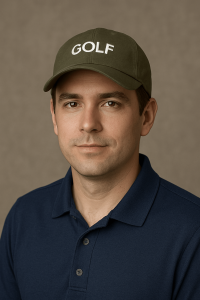

Two hundred and thirty-nine PGA Tour starts. Eight years removed from a car accident that collapsed his lung, broke his ribs, fractured his leg, and put him through surgeries he couldn't count on one hand. Two years back on Tour after a stretch away that had nothing to do with choice and everything to do with survival. Bud Cauley stood on the 18th green at TPC Toronto at Osprey Valley on Sunday afternoon, signed for a five-under 65, and waited to see if anyone could catch him. Nobody could. Cauley is the 2026 RBC Canadian Open champion — two shots clear of Matt Fitzpatrick at 17 under par — and the moment was as large as the journey that led to it.
Tournament Overview
The 2026 RBC Canadian Open was played June 11 through 14 at TPC Toronto at Osprey Valley's North Course in Caledon, Ontario, roughly an hour northwest of downtown Toronto. The North Course, a par-70 layout stretching to 7,389 yards, underwent a significant renovation in 2023 and 2024 under architect Ian Andrew in preparation for the return of PGA Tour-caliber competition. Andrew sharpened the course's teeth: opening views between holes through strategic tree removal, lengthening the total yardage, tightening fairways in the landing zones where Tour players drive the ball, and adding chipping areas around greens that were already among the most demanding on the schedule. The result is a par 70 with two par 5s, four par 3s, and twelve par 4s — a layout whose primary defense is its putting surfaces and whose finishing hole, a par 5 that requires both a demanding tee shot and an approach over water, has the ability to end a tournament or flip one entirely.
The field arrived for the final event in which players could earn Aon Swing 5 points toward FedExCup qualification, giving the week an added layer of consequence for players on the bubble. Among the notable names in the field were Matt Fitzpatrick, Viktor Hovland, Tommy Fleetwood, Wyndham Clark, Brooks Koepka, Sam Burns, and defending champion Ryan Fox — all of them chasing a title and the world ranking points that come with it. What none of them could plan for was what Bud Cauley had in his bag for four days.
Final Leaderboard
| Pos | Player | R4 | Total |
|---|---|---|---|
| 1 | Bud Cauley | 65 (-5) | -17 (263) |
| 2 | Matt Fitzpatrick | 64 (-6) | -15 (265) |
| 3 | Viktor Hovland | 65 (-5) | -14 (266) |
| T4 | Jackson Suber | 70 (E) | -13 (267) |
| T4 | Jimmy Stanger | 67 (-3) | -13 (267) |
| T4 | Brice Garnett | 68 (-2) | -13 (267) |
| T4 | Jesper Svensson | 68 (-2) | -13 (267) |
How It Unfolded
Round 1: A Six-Way Jam at the Top
Thursday's opening round at TPC Toronto produced a crowded leaderboard at the top. Six players finished the day at six under par — Sahith Theegala, Matthew Anderson, Emiliano Grillo, Eric Cole, Brooks Koepka, and Sam Burns — sharing the first-round lead after shooting 64 on a course that was gettable in the conditions but far from easy. Bud Cauley was not among them. He signed for a one-under 69 — steady, unspectacular, well within himself — and went to bed five shots off the lead. On a par 70, five shots is not nothing. It is, however, the kind of gap that disappears with one big round.
Round 2: Cauley Launches, James Leads
Friday was Cauley's day. He went out and shot a seven-under 63 — the low round of the tournament — that moved him to eight under through 36 holes and into serious contention. The round was a statement: birdies kept coming, nothing got away from him, and the course that had resisted on Thursday gave him nothing but green lights. He was not alone at the top, however. Benjamin James, a 23-year-old who had done little to announce himself to this field before the week began, eagled his opening hole and posted a round good enough to take the solo lead at 10 under through two rounds. James's name was not one anyone had circled in their preview — which made his position at the halfway mark all the more striking. Cauley was two shots back heading into the weekend.
Round 3: Suber Seizes Moving Day
Saturday reshuffled the leaderboard in a way that set up a wide-open Sunday. Jackson Suber, who had been lurking throughout the week, played the best ball-striking round of his tournament and grabbed the solo lead at 13 under par. Cauley sat one shot behind at 12 under, his round of 66 keeping him in the pack without separating from it. Wyndham Clark, Tommy Fleetwood, Brice Garnett, and Jesper Svensson clustered at 11 under, with Billy Horschel, Ryan Fox, Jimmy Stanger, and Sam Burns all within three shots of the lead at 10 under. Matt Fitzpatrick and Viktor Hovland — both ranked inside the top 20 in the world — sat at nine under, needing big final rounds to have any chance. The leaderboard entering Sunday was one of the most compressed of the PGA Tour season: eight players within four shots of the lead, and a course whose finish could produce anything.
Final Round: Cauley Closes the Door
Sunday at TPC Toronto sorted itself quickly and then held its shape. Cauley birdied the par-4 12th with a chip-in that moved him ahead of Suber and gave him the outright lead he never relinquished. He played the back nine with the kind of composure that suggests a player who has been through enough to know that a Sunday lead at a golf tournament is not the scariest thing life can ask of you. He signed for a five-under 65 — four rounds of 69-63-66-65 — and posted 17 under at the clubhouse.
Matt Fitzpatrick made the most serious charge. The Englishman shot a six-under 64 in the final round to move from nine under all the way to 15 under, a run that gave the grandstand a genuine contest for most of the afternoon. But Cauley held a two-shot advantage when the last putt dropped, and Fitzpatrick had to settle for solo second. Viktor Hovland finished one further back in third at 14 under. Suber, who had led entering Sunday, fell back in the group tied for fourth alongside Stanger, Garnett, and Svensson. The win belonged entirely to Cauley.
Key Storylines
239 Starts, One Champion
Before this week, Bud Cauley had never won on the PGA Tour. He had come close, contended plenty, and built a career that most players on any developmental tour would trade their careers for — but the win had not come. He made his Tour debut in 2012 and spent the better part of the next six years becoming one of the more consistent mid-tier players on the schedule. Then came June 1, 2018, a night during Memorial Tournament week in Dublin, Ohio, and a car ride that changed everything. His first win, at the 2026 RBC Canadian Open, came in his 239th Tour start. He earned $1,764,000 and 500 FedExCup points, moved to approximately 40th in the world ranking, and secured a full slate of exemptions that reset the map of his career. But the number that mattered most on Sunday afternoon was 239 — and the fact that every one of those starts was a step in a journey that included the kind of adversity most Tour players will never have to face.
The 2018 Accident and the Road Back
On the night of June 1, 2018 — during Memorial Tournament week, at a course where Cauley had missed the cut — he was a passenger in a car whose driver had a blood-alcohol level of 0.155, nearly twice the legal limit in Ohio. The crash left Cauley with broken ribs, a punctured and collapsed lung, and a broken bone in his lower leg. He returned to the Tour after the initial recovery, but the damage proved more complicated than the early prognosis suggested. Persistent pain in his right side forced him away from the game in late 2020 after a series of surgeries that did not fully resolve the problem. A seroma and inflammation on his colon added to a medical picture that had become increasingly difficult to manage. He was not on the PGA Tour not because he didn't want to be, but because his body would not cooperate. He returned to Tour competition in 2024, grinding through a schedule that offered no guarantees. Two years later, he stood on the 18th green at Osprey Valley as the champion of Canada's national open.
Fitzpatrick's Final-Round Charge Falls Two Short
Matt Fitzpatrick had spent Saturday sitting at nine under, four shots off the lead, and in the kind of position where the math is possible but not comfortable. He answered with the best final round of any player in contention — a six-under 64 that moved him ten places up the leaderboard and put genuine pressure on Cauley through the back nine. Fitzpatrick's week at TPC Toronto was a reminder that a player who sits outside the top ten at the 54-hole mark is not necessarily out of the tournament on a par-70 course with a compressed leaderboard. He came two shots short, but the result — solo second at a PGA Tour event — extended a stretch of consistent play that has made him one of the more reliably dangerous players in any field he enters.
Jackson Suber's Sunday Unravels
Jackson Suber led this tournament entering the final round and had done everything right to get there. He had navigated Moving Day at TPC Toronto better than almost anyone, reaching 13 under and standing one shot clear of Cauley with 18 holes left to play. Sunday did not go his way. Suber fell back into the group tied for fourth, unable to sustain the form that had carried him through the first three rounds. It is the kind of result that stings in the moment and teaches in the aftermath. He was in position to win a PGA Tour event. That he did not does not erase the fact that he put himself there — and that doing so once makes it easier to get there again.
Defending Champion Fox Comes Up Short
Ryan Fox arrived at TPC Toronto as the defending RBC Canadian Open champion, having won the title a year earlier. He was in contention through the middle rounds, sitting at 10 under entering Sunday with a realistic path to a back-to-back title that would have made him the first player since Jhonattan Vegas to win consecutive Canadian Opens. Fox was unable to close the gap on Cauley in the final round and finished outside the top four. The defense ends here, and the course returns next year with a new champion to unseat.
Final Thoughts
The 2026 RBC Canadian Open gave golf the kind of winner that the game occasionally produces and never forgets. Bud Cauley waited 239 starts, survived a car accident that broke three bones and collapsed his lung, fought through surgeries and years away from the sport, and came back to the Tour not with a guarantee of anything but with the intention of making the most of whatever time he had left. What he had left, it turned out, was enough to win Canada's national open on a Sunday afternoon in June, two shots clear of the field, in one of the most emotionally resonant victories the PGA Tour has produced this season. He dedicated the win to everyone who helped him get there. Given the length of that list, it was the only appropriate thing to do.