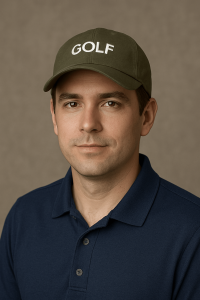

For five hours on Sunday, Wyndham Clark played the most important round of his career in front of a crowd that was rooting against nearly every shot he hit. They jeered from the first tee. They cheered his mistakes. They sang happy birthday to Scottie Scheffler, who turned 30 on Sunday, as a pointed reminder that the gallery had a different champion in mind. Clark heard all of it. He absorbed it, answered it with the only currency that matters at a U.S. Open, and signed for a three-over 73 that was just good enough to hold off Sam Burns by a single stroke. He is the 2026 U.S. Open champion at Shinnecock Hills — his second national title, the ninth wire-to-wire victory in championship history, and one of the most hard-fought wins the game has produced this year.
Tournament Overview
The 126th U.S. Open Championship was played June 18 through 21 at Shinnecock Hills Golf Club in Southampton, New York — the club's sixth time hosting the national championship and one of the most anticipated U.S. Open settings in modern golf. Shinnecock Hills, founded in 1891 as the oldest incorporated country club in the United States and one of the USGA's five founding clubs, holds a place in the sport that few venues can match. The current course layout was designed by William Flynn in 1931, routing the holes to create wind exposure from multiple directions so that no two days play the same. In the 2010s, architects Bill Coore and Ben Crenshaw led an extensive restoration aimed at returning Flynn's layout closer to its original form — widening fairways, removing trees, restoring fescue roughs, and recovering lost pin positions. The result is a course that has no weak holes, no breaks from the difficulty, and no escape from the wind that rolls off the Atlantic and across the South Fork of Long Island.
The week's conditions were set on Thursday morning, when heavy fog rolled across the property and forced a two-hour delay before the first round could begin. Play was suspended at 7:05 a.m. ET just thirty minutes after it started, with only eighteen players on the course when officials halted competition. When the fog lifted, the wind arrived: 15 to 25 miles per hour with gusts reaching 31, turning a course that was already among the most demanding on the championship schedule into something close to a survival test. Fifty players did not complete their first rounds before darkness ended play Thursday evening.
Final Leaderboard
| Pos | Player | R4 | Total |
|---|---|---|---|
| 1 | Wyndham Clark | 73 (+3) | -4 (276) |
| 2 | Sam Burns | 67 (-3) | -3 (277) |
| 3 | Tom Kim | 70 (E) | -1 (279) |
| T4 | Scottie Scheffler | 71 (+1) | E (280) |
How It Unfolded
Round 1: Clark Fires 64 Through the Wind and the Fog
When play finally got underway after the fog cleared Thursday morning, the wind picked up where the fog left off. The conditions were as close to a U.S. Open examination as the USGA could have designed: a historic course, exposed fairways, fast greens, and gusts pushing 30 miles per hour. In those conditions, Wyndham Clark shot a six-under 64 — the second-lowest round ever recorded in a U.S. Open at Shinnecock Hills. He made birdies, managed the wind better than anyone else in the field, and built a lead while the rest of the competitors were doing everything they could just to stay near par. Keith Mitchell turned in one of the individual performances of the day, completing the front nine in 29 strokes — including an eagle on the par-5 fifth — setting the Shinnecock Hills nine-hole record for U.S. Open play. Amateur Ryder Cowan also stood out, posting a two-under 68 that matched the lowest opening round by an amateur in Shinnecock U.S. Open history. Clark, however, was in a category of his own at the end of day one.
Round 2: A 36-Hole Record and a Four-Shot Cushion
Friday's second round did not produce another 64 from Clark, but it did not need to. He played the course in one-under 69 — steady, mistake-limited golf that padded his lead while the rest of the field tried to close ground they couldn't quite recover. His 36-hole total of seven under par set the Shinnecock Hills record for a U.S. Open at the halfway mark. He carried a four-shot lead into the weekend over Xander Schauffele, Matt Fitzpatrick, and Sam Stevens — all three at three under — while the tournament began to look less like an open contest and more like a coronation in progress. Jon Rahm and Bryson DeChambeau, both of whom had been within reach of the lead after the first round, missed the cut. The 156-man field was being sorted, and Clark was at the top of the sort.
Round 3: The Lead Grows, the Field Fades
Moving Day at Shinnecock Hills was supposed to be the round that brought the field back into range. It was not. Clark shot an even-par 70 — his third consecutive round at or below par — and his seven-under total of 203 through 54 holes set the lowest 54-hole mark in Shinnecock Hills U.S. Open history. The field, rather than closing the gap, fell further behind. Scheffler chipped in on the 14th to reach two under for the tournament but gave the stroke back with a bogey on 17, finishing the day in a tie for second at one under alongside Tom Kim, Sam Stevens, and Sahith Theegala. Clark entered Sunday with a six-shot lead. Entering the final round of a U.S. Open at Shinnecock Hills with six shots to play with looked, on paper, like more than enough. Shinnecock Hills had other ideas.
Final Round: The Lead Shrinks, the Crowd Turns, Clark Holds
Sam Burns began the final round seven shots off the lead at even par and was not, by any reasonable reading of the scoreboard, a factor. He birdied three of his first eight holes and suddenly was. Clark, meanwhile, was navigating both the course and a gallery that had made its preferences clear from the first tee. A spectator called "crash and burn" as he stepped up to his opening drive. Others urged his ball toward bunkers and rough throughout the round. When an errant approach found the ground near a trash receptacle, a voice from the crowd supplied the editorial: "Just like your game, trash." The gallery sang happy birthday to Scheffler and cheered Clark's mistakes. Clark kept playing.
The six-shot lead eroded through the front nine as Burns birdied and Clark made bogeys. By the time the back nine began, the margin had shrunk to something the leaderboard could no longer dismiss. The defining moment of the tournament came at the par-5 16th hole, where Clark rolled in a 35-foot birdie putt that pushed him two shots clear of Burns and gave him the separation he needed to close. He made it to the 18th, found a bunker off the tee, and survived. Burns, needing a birdie on 18 to tie, missed his putt by half an inch. The tournament was over. Clark signed for 73, finished at four under for the championship, and raised his second U.S. Open trophy.
Key Storylines
Nine Wire-to-Wire Winners, and Clark Is One of Them
Holding the outright lead after every round of a U.S. Open is one of the rarest things in major championship golf. Clark became just the ninth player in U.S. Open history to accomplish it — the first since Martin Kaymer did it at Pinehurst No. 2 in 2014. He also became the eighth player to hold sole possession of the lead after all four rounds, a distinction that requires not just sustained quality but the ability to hold off everything the course and the field can throw at a player under the heaviest possible pressure. Clark did it at Shinnecock Hills, which has been breaking players' spirits since the 1890s. That it held for four days, against that field, in those winds, says everything about the quality of his week from Thursday through Sunday.
A Champion the Crowd Didn't Want
Clark acknowledged after the final round that the crowd "didn't like" him — a candid understatement of what he dealt with for eighteen holes on Sunday. The heckling was persistent and, at times, pointed: spectators called for his shots to find bunkers and hazards, cheered his mistakes, and found ways to express their displeasure throughout the round. What Clark did in response was win anyway. He never lost his composure publicly, never engaged with the gallery, and never stopped hitting golf shots when the tournament was on the line. Whether a hostile crowd was ever going to change the outcome of a round where Clark led by six shots is a separate question from whether it made the victory harder to earn. The answer to the second question is yes. He earned it the hard way.
Sam Burns and the Half-Inch That Decided Everything
Sam Burns played the best round of anyone in contention on Sunday — a six-under 67 that moved him from even par all the way to three under and turned what looked like a comfortable Clark victory into a genuine one-shot finish. He had made three consecutive U.S. Open top-10 finishes and played Sunday with the controlled aggression of a player who knew he needed to shoot something extraordinary. He shot it. But the 18th green putt that would have tied the leader missed by half an inch — a margin that exists more in the realm of luck than skill, and one that Burns will have to make peace with in his own time. He gave himself every chance to win a major championship on Sunday afternoon. The miss on 18 is the one moment that kept him from taking it.
Scheffler's Birthday Runs Out of Magic
Scottie Scheffler turned 30 on Sunday and arrived at Shinnecock Hills as the sentimental favorite of a gallery that wanted to see him charge. He had the crowd from the moment he stepped on the first tee. He chipped in on the 14th in the third round to build momentum heading into the final day and entered Sunday six shots off Clark's lead — a gap that is large but not impossible on a U.S. Open course that has a habit of moving scores in both directions. Scheffler was unable to make the run he needed. He finished the week at even par, tied for fourth, and left Long Island without the birthday-round charge the gallery was pulling for. The birthday party ended without a gift.
Clark Joins the Multi-Major Club
Wyndham Clark won his first U.S. Open in 2023 at Los Angeles Country Club — a victory that announced him as a major champion and opened the door to the conversation about who he could become. The 2026 U.S. Open at Shinnecock Hills is the answer to that question. He is the 24th man to win multiple U.S. Open titles, joining a list that includes Nicklaus, Hogan, Jones, and Player. That is the company his name now occupies in the record books, regardless of what a Sunday gallery at Shinnecock thought of it. He won two U.S. Opens before his 33rd birthday at one of the sport's most historically significant venues. The haters were there. They can read the trophy.
Final Thoughts
The 2026 U.S. Open at Shinnecock Hills gave the game a champion who earned the title the hard way — through four days of wind and fog and pressure, through a final round that shrank a six-shot lead to one, through five hours in front of a crowd that made no secret of its preferences. Clark was wire-to-wire at one of golf's most demanding and historic venues, set records that had stood at Shinnecock for decades, and held off a Sam Burns charge that came within half an inch of forcing a playoff. He walked off Sunday evening as a two-time U.S. Open champion. Shinnecock Hills, which has been testing the best players in the world since 1896, produced exactly the kind of champion it was designed to find: one who could not be rattled, could not be beaten by the course, and could not be stopped by the noise. That is what a U.S. Open champion looks like. That is Wyndham Clark.